It’s nearly impossible to experience life-threatening illnesses and not be changed in some way. Many feel unprepared for life and feel adrift after a cancer journey. Currents of worry race through the mind about whether treatments worked, the risk of recurrence and maybe even death.
Working through difficult emotions is equally as necessary as physical healing.
If you struggle with difficult emotions speak up. Seek help to cope with them even though it may be uncomfortable. You may find it easier to keep silent rather than express how you feel. You may even believe that if you don’t talk about the problem then it doesn’t exist.
Some people feel that they don’t want to ever think or talk about cancer again. Avoidance is never a wise choice. Keeping difficult emotions bottled up becomes a roadblock to healing.
Many feel lost in translation over the definition of “survivor.” Does survivor begin at the time of diagnosis or when treatment is over?
You get to decide. If you can’t answer this question, don’t panic. This is not a time when you need to know every answer. This is a time to be comfortable living with questions and thoughtful about finding answers.
After cancer treatment, the transition from patient to former patient can be described as a “liminal time.” A term defined as between "then" and "future". A space of transition.
Are you someone who had cancer, but do not feel like a “survivor?” The time after cancer treatments are over can sometimes feel like you’re in a free-fall.
Be patient, then even more patient. Give generous self compassion to yourself and some space to process emotions that come with a cancer diagnosis.
Making time for this allows you to reconnect with yourself and have space to trust your body, and life, again.
Consider the toll this experience had on your whole self: body, mind and spirit. Months or years of treatments takes longer to heal from than most people realize.
Helpful wisdom to lean on is remembering the distinction between “curing” and “healing”. Many mistake cancer treatments as the healing. Treatments offer assurance in some ways, but emotional healing requires a deeper inquiry.
Seek the opportunity to understand how you have changed because of this experience. What you are left with emotionally?
As you practice opening up, you may start talking to others only to learn that they are surprised you “still talk about cancer.” This can make you feel guilty because you “survived.”
Remind yourself that although treatment is over, the emotional fallout may not be. Something as stressful as a serious illness requiring difficult treatments isn’t easy to forget. Those who haven’t faced a life-threatening illness don’t understand the depth of lingering worry associated with the diagnosis.
Another challenge you may be up against is feeling that you have no one to turn to. You believe you have exhausted your circle of support. You don’t speak up because you don’t want to burden anyone further.
The ground beneath your feet may not feel stable, yet no one can tell you are struggling. There are people out there who care to listen. Find them. Open up to them. You will feel better for it.
Some days, you may want to rush and put the experience behind you. It’s too painful to think about. You try and run away from any memory of it. Impatience is often the worst enemy.
There will be days you feel better, then other days you feel fragile and caught off guard by a flood of tears or raw emotions. Many things trigger painful memories and overwhelming feelings. Be prepared for surprise emotions. If you allow healthy ways to process your experience, these feelings will likely have less of a hold over you.
Sometimes you need to consider leaning on professionals. Psychologists and psychiatrists help navigate and process persistent, difficult feelings. Make sure your survivorship plan has many resources.
Groups and conversations with survivors put you together with kindred spirits who may be a lifeline to your healing. Other survivors offer an empathetic shoulder and bond.
Remember, life is lived forward, but understood backwards. Thoughtfully processing where you are in healing your body, mind and spirit helps put the pieces of your life back together. You will find yourself less adrift. Instead of emotional resistance, you will move forward with emotional resiliency.
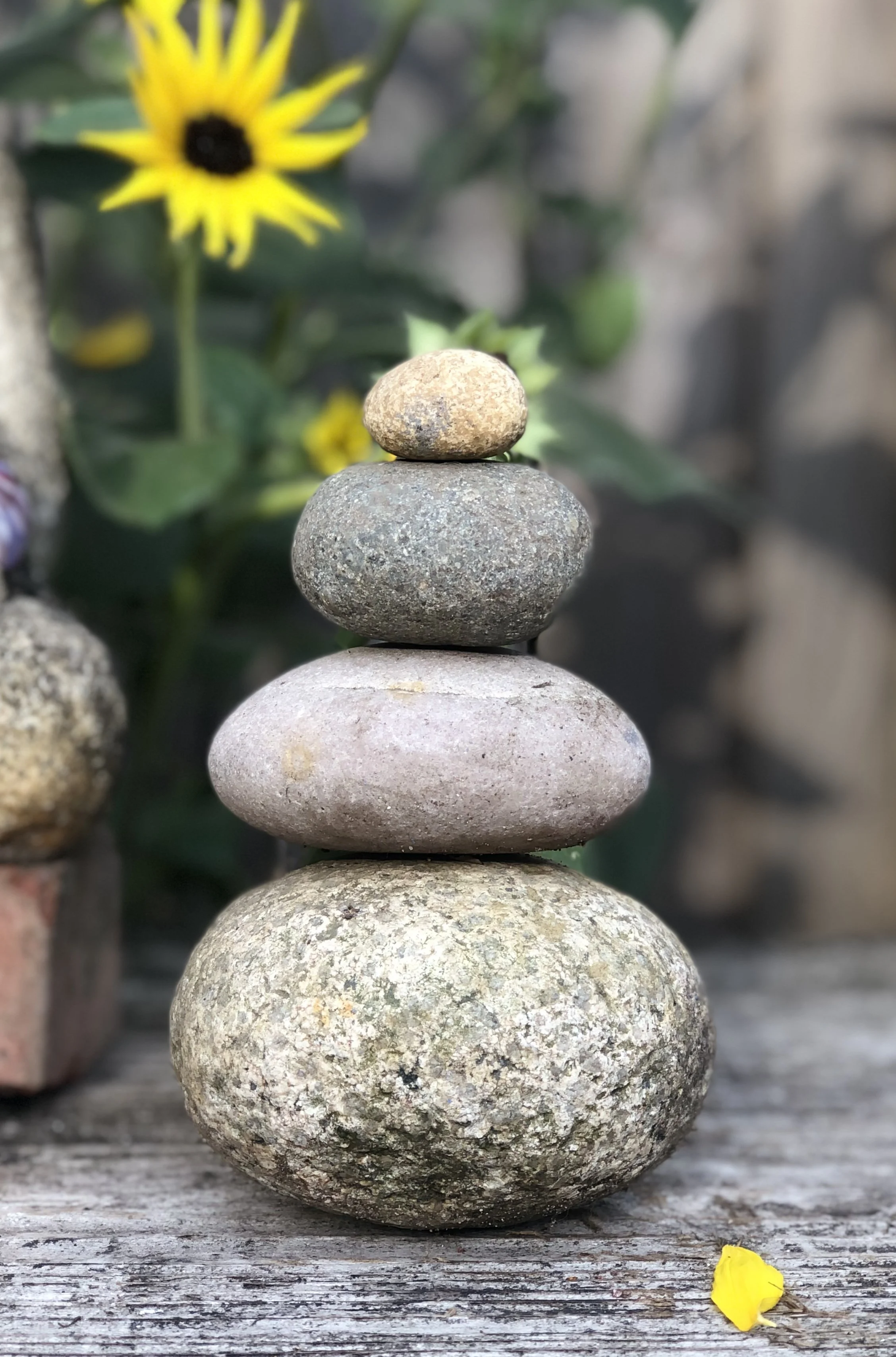
For centuries rock stacking has carried spiritual meaning across cultures. Balancing stones reflects the practice of patience and creating balance. Rock cairns are used to help people find their way on paths.